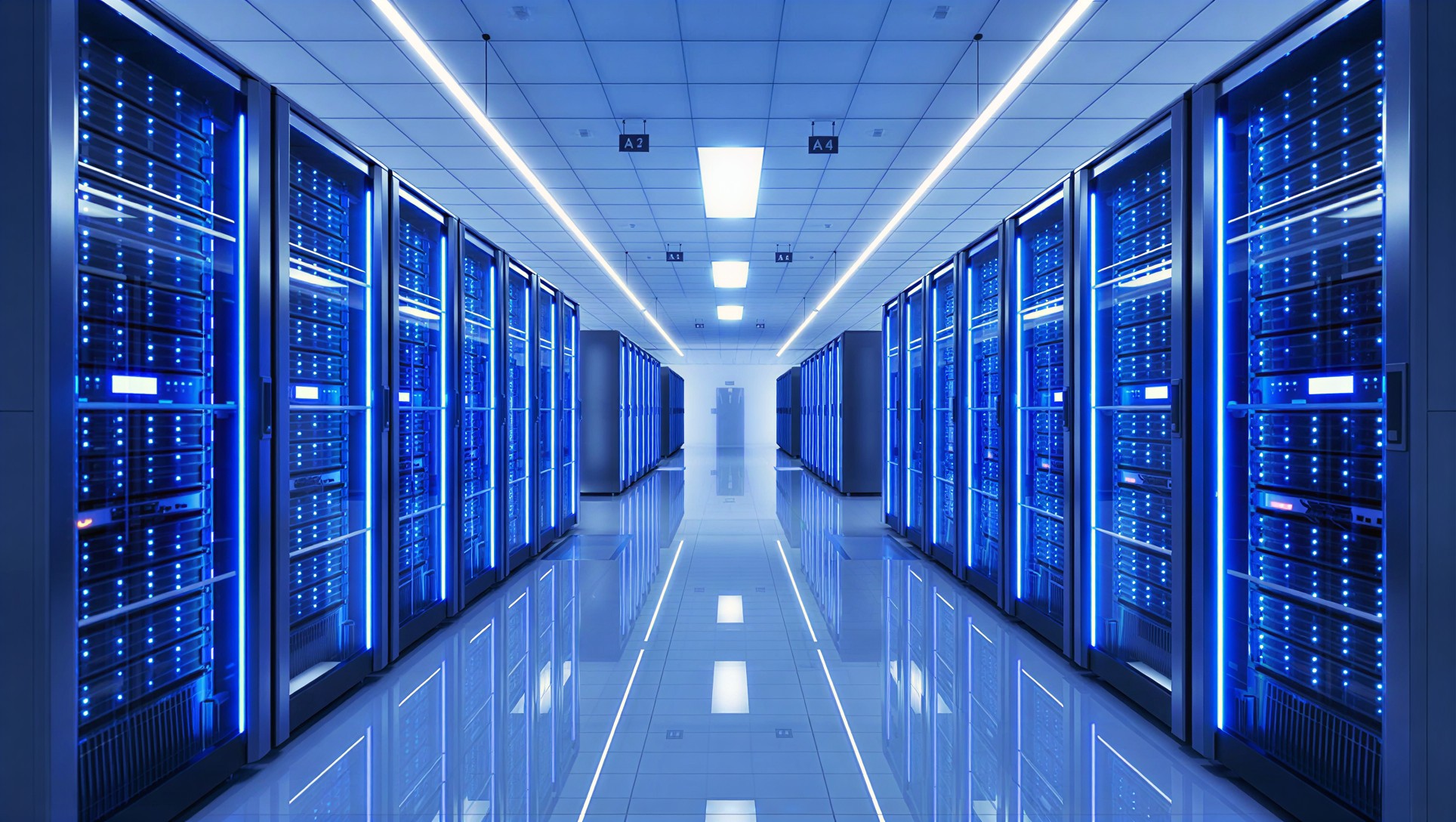
The race to fuel the explosive growth of AI data centers is injecting new life—and significant investment—into grid infrastructure startups. As demand for electricity skyrockets, utilities face a major bottleneck: how to deliver massive amounts of power through aging, constrained networks.
This urgent need for grid enhancement is opening a high-voltage opportunity for companies developing cutting-edge solutions, including superconducting cables and real-time grid intelligence.
Veir: The Superconducting Cable Bet
Massachusetts-based Veir, Inc. is tackling the capacity problem by championing superconducting wires. These innovative cables use special material cooled by liquid nitrogen (at $-196^{\circ}\text{C}$) to carry electricity with virtually zero loss.
Veir claims its technology allows cables to carry up to 10 times the electricity of traditional aluminum lines of similar size. To overcome the high cost and maintenance associated with cryogenic cooling, Veir has developed a novel, "sweating" technology that allows some nitrogen to evaporate to re-cool the pipe, minimizing the need for expensive compressors.
The market is taking notice: Veir recently closed a $75 million investment round, led by Munich Re Ventures and supported by heavy hitters like Microsoft Corp. and National Grid Partners. This funding aims to support the first large-scale deployment of Veir's tech at a data center this year.
LineVision: Real-Time Grid Intelligence
If superconducting cables prove too costly for widespread adoption, other startups offer more immediate, cost-effective capacity gains. Dynamic Line Rating (DLR) technology, pioneered by Massachusetts-based LineVision, provides utilities with real-time data on cable conditions (like sag and temperature).
By understanding the true capacity of existing lines, utilities can safely push more power through them without risking overheating or failure. This real-time monitoring transforms an older network into a smart grid.
LineVision has also secured major investments (including from Microsoft and National Grid), demonstrating the commercial viability of its approach. One UK project saw LineVision's sensors increase capacity by 19%, saving the utility $\text{£}14$ million ($\$17.5$ million) in a single year. The company is now rapidly scaling deployments across eight countries.
The Electrification Imperative
Beyond AI, the rising adoption of electric vehicles (EVs) and heat pumps is further straining the grid.
Key Insight: The biggest challenge is not generating power, but delivering it.
Startup Solutions: The crisis is forcing utilities to embrace technologies that increase power capacity and provide grid resilience.
Whether through Veir's revolutionary superconducting wires or LineVision's pragmatic real-time sensors, the global electrification trend is pushing venture capital to invest in the future of the power delivery system.